


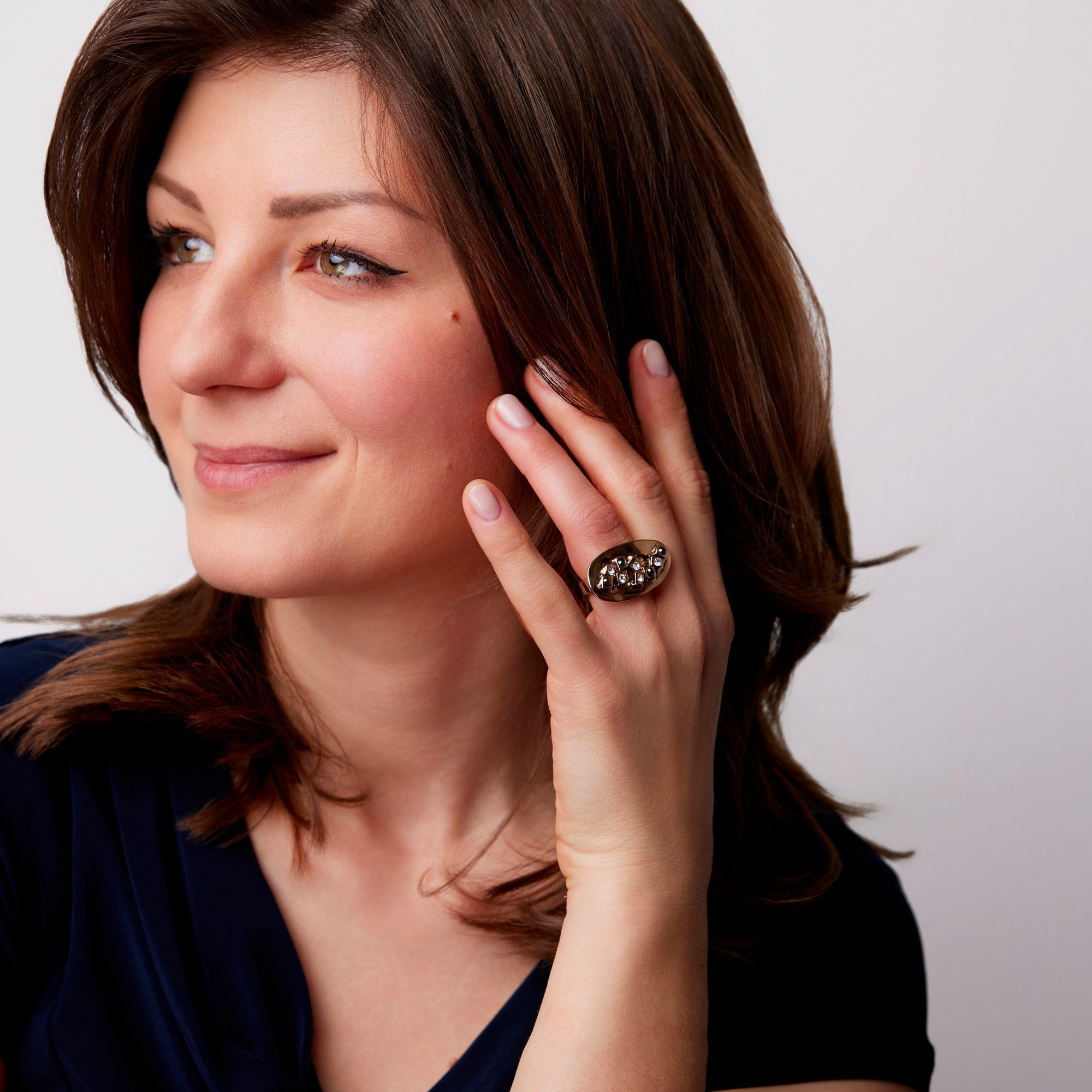
No. 3 - Time in metals: why skin can change color
Jewelry · Materials & Care
Metals never stay the same. Bronze, brass, copper, and silver react to light, air, humidity, and skin contact. Over time, their surfaces change: they can darken, oxidize, develop new shades, or develop subtle patinas.
It's not a defect. It's the nature of matter.
Bronze and brass contain copper: bronze is an alloy of copper and tin, while brass is an alloy of copper and zinc. It is precisely copper that, when in contact with sweat, skin pH, humidity, perfumes, creams, and oxygen in the air, can create oxides and natural salts. This can cause a faint green or dark mark on the skin.
It's not toxic. It's not dangerous. It's a superficial, completely natural reaction. The real difference is in the skin's pH: each person is unique; some never get blemishes, while others more easily develop a halo.
Authentic metal interacts with its wearer; it lives, changes, and responds. In this sense, time doesn't ruin metal. It completes it.
Surfaces gain depth, colors change, textures become more complex. Two identical jewels, after being worn, will no longer be truly identical.
Often, these transformations are already part of the design: some copper jewelry is intentionally oxidized, while bronze can develop turquoise-toned patinas, designed to give depth and character to the surface. Every mark, every variation, is part of the history of the jewelry and its wearer.
Precisely because we don't use any galvanizing, protection, or surface treatments, the metal remains authentic from start to finish. It can be cleaned, cared for, and restored to its original appearance, without having to remove artificial layers or reapply treatments.
Let's not try to stop change entirely. Let's try to accompany it.
Maintenance serves to preserve the balance of the jewel, not to erase its character.
Comment
This site is protected by hCaptcha and the hCaptcha Privacy Policy and Terms of Service apply.